The Life-Changing Power of Nature: Our Smartphone FREE Childhood Journey
My first experience in the woods with a group of Year 7 students had a profound personal impact, igniting a passion to help even more young people experience the incredible benefits of the natural world, after I saw up close the effects Smartphones have had on them. This journey has led me to speak recently as part of the Smartphone FREE Childhood initiative in Warwickshire. It’s been truly eye-opening, and Laura and I are deeply committed to helping families navigate the challenges of smartphone overuse and rediscover the joys of real-life connections.
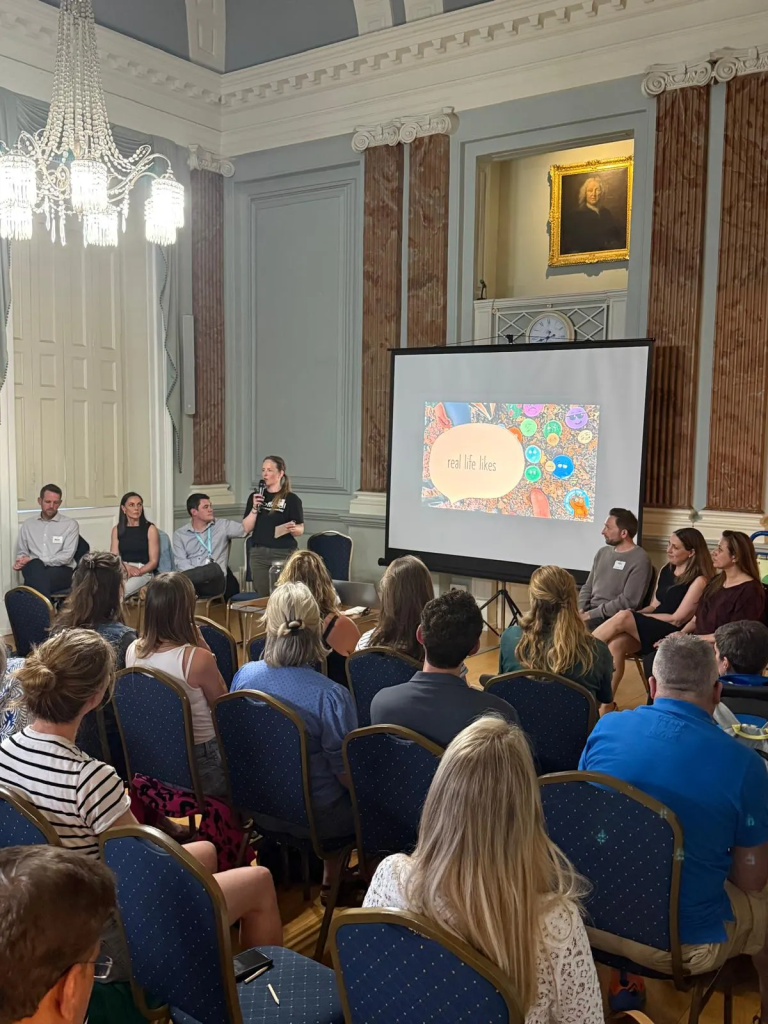
The Power of Little Wins: Glimmers in a Smartphone World
Last night we were part of a line up of speakers for smartphone FREE childhood, talking about how nature and power of glimmers can combat smartphone effects.
Apr 30, 2025
My job was to bring a ray of light and show what is possible through the power of nature, movement and of course glimmers.
Lovely feedback from Kings High School, Warwick “deeply impressed by the speakers and the discussion. You are doing excellent work on a vital topic to safeguard children and I am pleased you are gaining a lot of interest and attention”
As we all know, children’s mental health issues are on the rise, and one significant contributing factor is the prevalence of smartphones. We are dedicated to supporting a smartphone-free childhood, witnessing firsthand the detrimental effects these devices have on children’s ability to concentrate, be present, connect with themselves and others. Conversely, we see the powerful, detoxifying influence of nature.
This Substack is reader-supported. To receive new posts and support my work, consider becoming a free or paid subscriber.
Real Life Likes: Creating Natural Highs
Our bodies are designed to be in nature, designed to move. When we engage in these activities, we experience a natural high – a “real life like.” The sensory input of the natural world and the physical exertion release endorphins and create a sense of well-being, something that constant screen stimulation actively disrupts. Imagine the feeling of cool grass under your feet or the satisfaction of a good run – these are the authentic experiences our bodies crave.
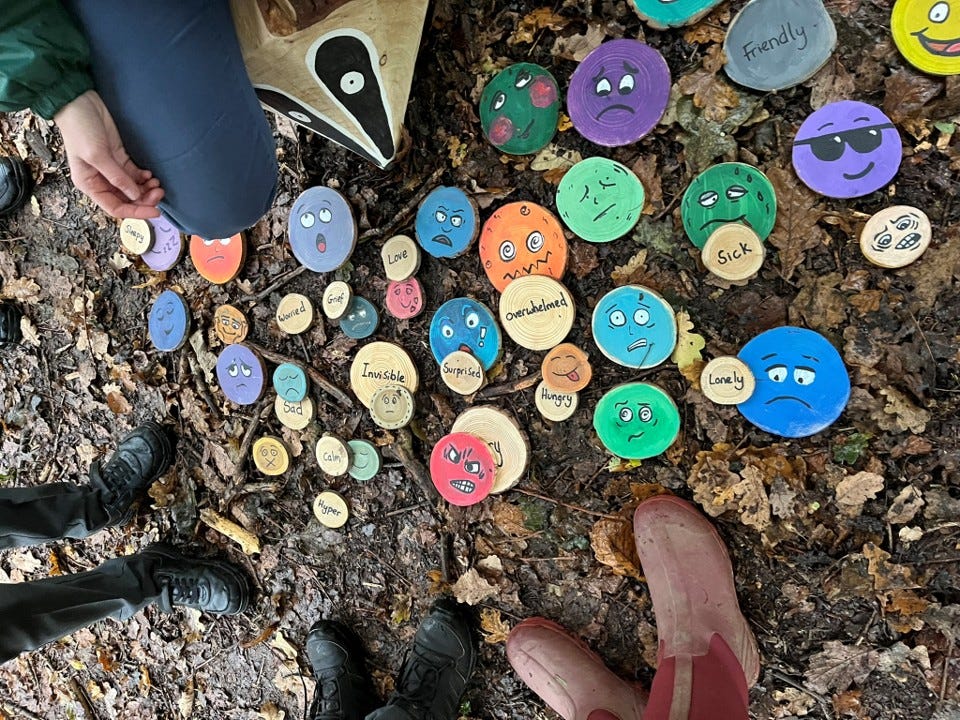
Smartphones, on the other hand, create fake highs and pull us away from the present moment, disconnecting us from the real world and genuine connections. This displacement is a significant contributor to the rise in children’s mental health challenges.
It’s truly amazing working with kids (and teachers!), observing the positive transformations that nature and our wellbeing tools bring about. It can be life-changing. Just last night, I shared a story about an activity with 11/12-year-olds where we were “planting” negative emotions in the woods. Suddenly, some of the girls started screaming. Laura and I rushed over to investigate…
“Miss, Miss, it’s a snake!”
We looked down, and to be fair, it was a big one… a worm. These girls had no memory of ever seeing a worm before. Sadly, this detachment from nature is not uncommon among the children we work with.
To receive new posts and support my work, consider becoming a free or paid subscriber.
What’s incredible is how quickly children adapt, benefit from, and fall in love with being in nature. For many, this experience is transformative. They often go from expressing “I hate nature” to eagerly wanting more in a very short time. We see this pattern repeatedly. One boy we’ve been working with, who has faced significant challenges, has shown an amazing journey. He went from someone who had never spent time in nature to now actively seeking it out. Instead of being on his smartphone at weekends, he’s building dens.
Small changes can make a massive difference
We all have the power to create change, and even small shifts can have a significant impact. One such change is through focusing on “glimmers” – those tiny moments of joy in everyday life. Children should naturally find these easily, but many struggle because their brains have been trained by constant digital stimulation to always seek the next thing, essentially “swiping” in their minds.
“Miranda and her teams coaching is amazing, it reconnects children to the world and gives them purpose outside of digital.” Parent of teen going through 1-2-1 Coaching
Teaching children about glimmers helps them anchor themselves in the present moment, a skill that can be cultivated both in school and at home. This seemingly small practice can have a profound positive effect on their wellbeing, counteracting the constant external pull of technology. Think about the warmth of the sun on your skin, the sound of birds singing, or the taste of a favorite food – these are all glimmers. Encourage children to actively notice and appreciate these small joys.
There is a wealth of information surrounding smartphone FREE childhood movement, and we also offer advice for schools and parents looking to navigate this. Remember, saying “no” to excessive screen time isn’t about taking something away; it’s about giving back the precious gift of childhood – a childhood connected to the real world, to nature, and to genuine human connection.
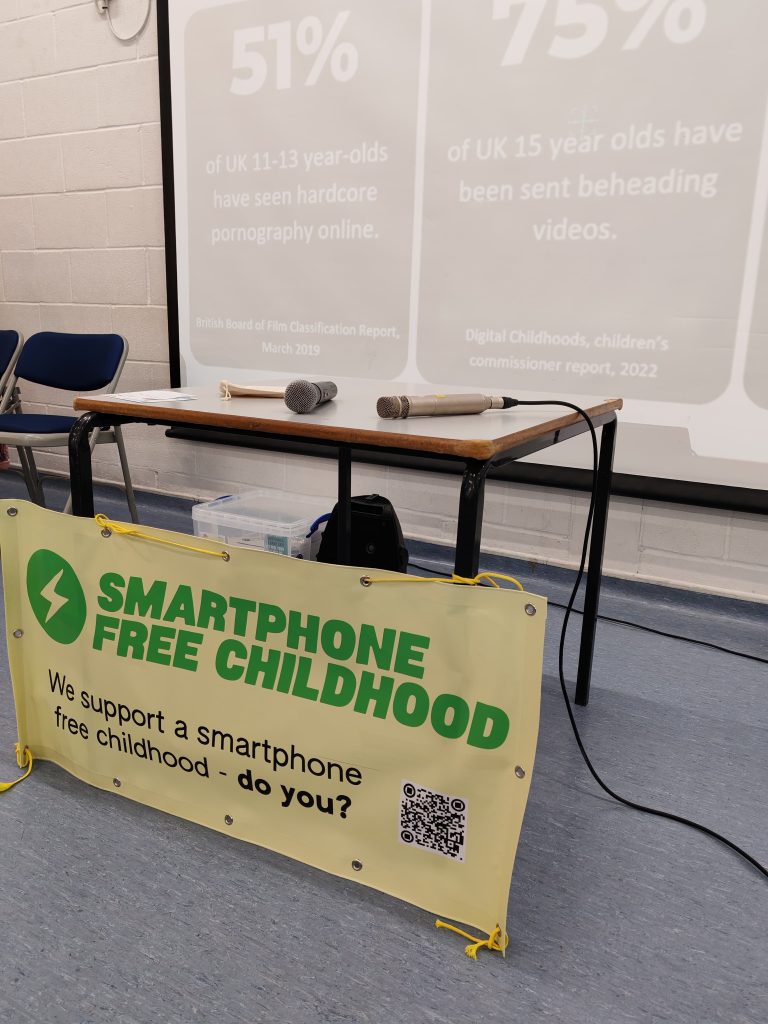
It was once again so great to meet such a powerhouse of people dedicated to helping kids and families access a smartphone FREE childhood, the evidence is overwhelming on the negative effects on kids, but we do have the power to make change in this area. There is lots of support here for schools and parents too.
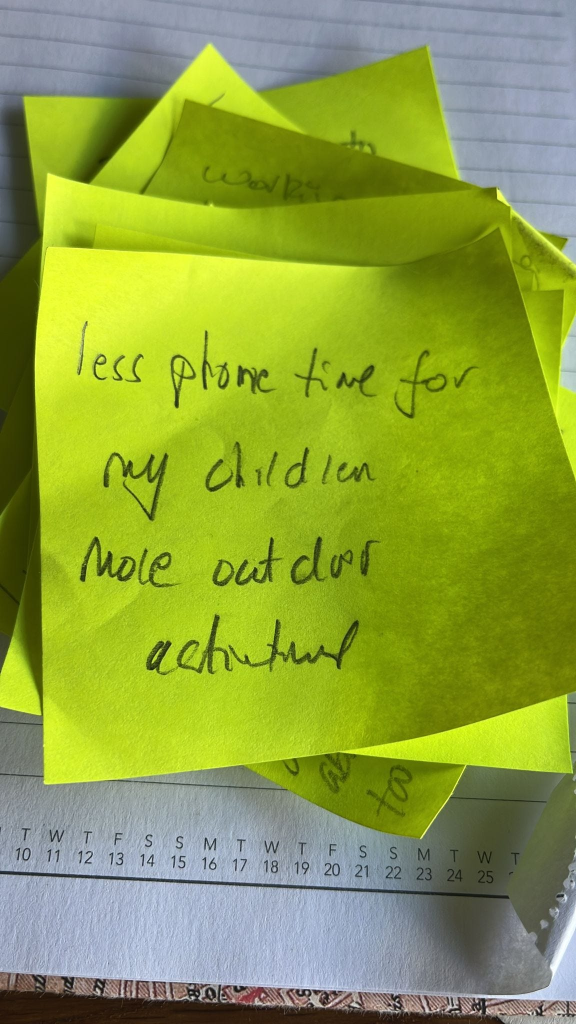
This is one of my favourite pledges that we collected from the sessions…
Headteacher Roberta Harrisonfrom Harris Church of England Academy in Rugby, gave a truly inspiring speech and talked about the steps they are taking to remove smartphones completely from the school day, she is a true powerhouse committed to making this really important change and quickly within her school.
It was also great to meet Dr Susie Daviesauthor of the HEALTHY SELFIE, a fellow speaker who has been ahead of the curve on this vital issue and her message to parents was clear: get talking, start the conversation with kids on the subject and above all else DELAY. We’re so passionate about this initiative, and it was brilliant to extend those discussions into our home town in Kenilworth.
The Smartphone Question
Senior school is often when many parents consider getting their child a smartphone. As huge advocates for smartphone-free childhood, we’d love to see tighter regulations in schools to reduce the number of children with phones and ease the pressure on parents to buy them. I’ve seen first-hand the mental health issues that smartphones can create, not just for a few kids, but for so many.
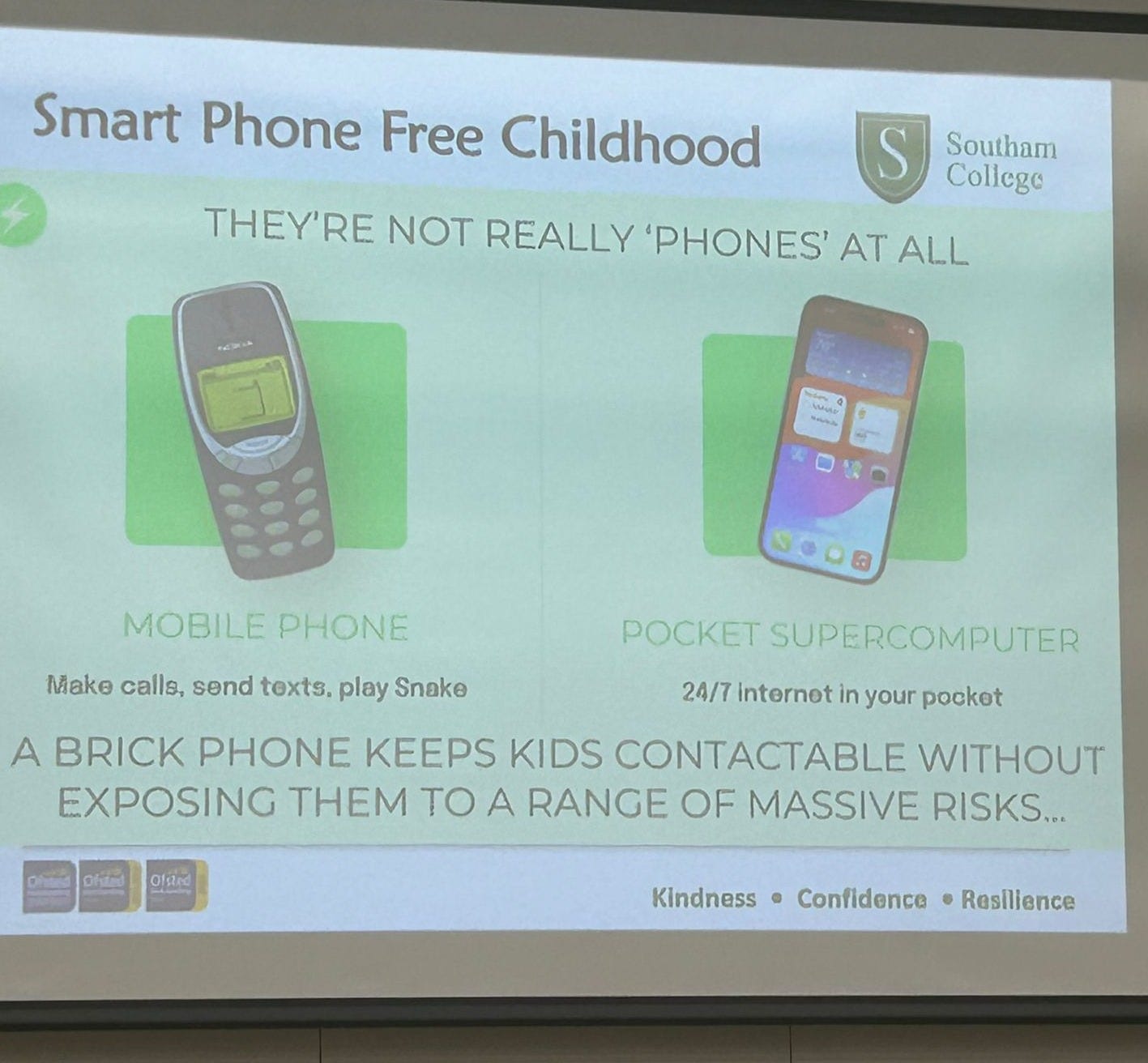
My son is 11, at the end of year 6 and a few months ago, I decided to get him a “brick phone” – it can only call and text. It was his first phone, and it’s been such a positive experience for us. He can now independently arrange meet-ups with friends, and even though many of his peers have smartphone his friends have totally adapted to texting him and he loves the fact that he has a retro phone!
Starting secondary school with confidence in yourself is a superpower, and the more we can empower kids to do this, the more they’ll have great life experiences and feel happy and fulfilled. For advice on going smartphone-free, join us here.